

Hardware
IFA 2025: Now your home
will think for you
The sales pitches in Berlin ranged from healthier living to a kitchen that pre-empts family life, writes ARTHUR GOLDSTUCK.

A decade ago, “smart home” meant shouting at a voice assistant to switch off the lights. Five years ago, a clap of the hands was all one needed. But even that was too much work for humans.
This weekend, as Berlin opened the doors of IFA 2025, the world’s largest consumer technology show by attendance, the next big shift was … silence. Now, smart homes are expected to think for you, anticipating your needs and acting on them.
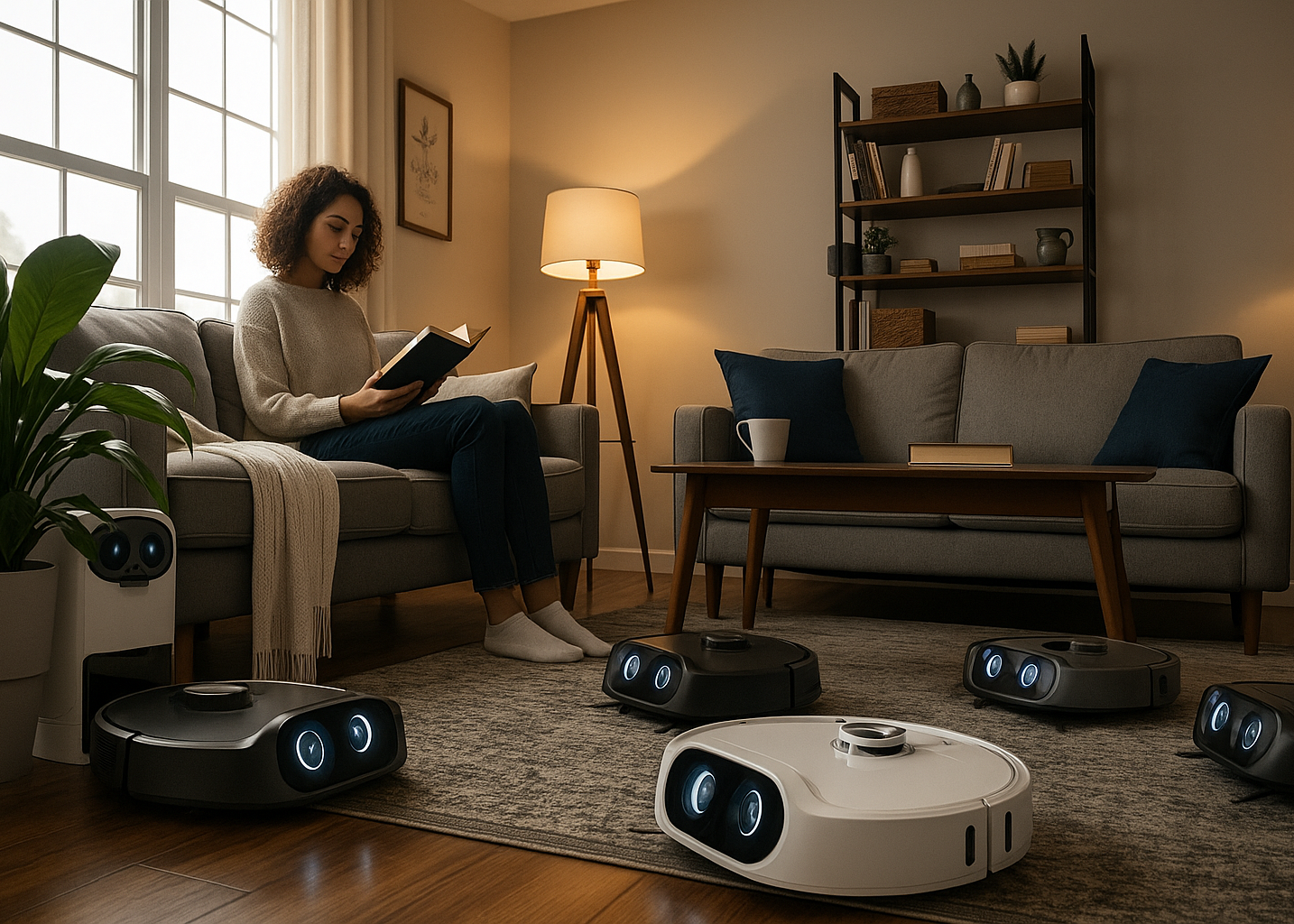
This year, fridges adjusted cooling cycles before the door was opened, and ovens recognised the dish shoved inside them. Even the robot vacuums were getting uppity, now doubling up as security guards. In short, the house has a mind of its own.
Bosch and Siemens brought the clinical precision of German engineering into this theatre of autonomy.
Bosch showed off Matter-enabled products, underlining the industry’s grudging acceptance of this common language for smart devices. A motion sensor designed to slot into this ecosystem suggested the company is as interested in the invisible plumbing of smart homes as in cool gadgets. Its French-door XXL fridge-freezer stretched both the definition of “kitchen appliance”, not to mention the kitchen itself.
Siemens put on the real showstopper: an oven that can identify more than 80 dishes and automatically pick the correct cooking settings. In other words, the machine tells the cook what to do, not the other way round.
LG went in a different direction, trying to make its appliances move in sync. Its ThinQ ON platform turned a suite of machines into a choreographed ensemble. Fit & Max refrigerators were not only giant in size but also in ambition: they predicted behaviour, like when the door would be opened, and eased up on energy use during quiet hours. The effect is a kitchen that pre-empts family life. LG calls it efficiency. Some of us would call it ”surveillance”.
Miele, usually the sober face of German appliances, went outdoors. Its Fire Pro IQ grill is pitched as a high-tech centrepiece for a braai, adjusting temperature automatically and following recipes remotely. You can guess how that would go down in South Africa, as It turns one of our loved rituals into a dialogue between phone and flame.
Chinese smart home specialist Aqara continued to expand the “essentials” category. A wired video doorbell, the G400, and a solar-powered G510 outdoor camera leaned heavily on object recognition. Hubs, thermostats and smart plugs were all on display, made palatable by support for Matter and Thread. Translation? A web of control is spreading across the home.
Eufy turned its RoboVac Omni S1 Pro into an all-in-one floor service: mop pads that wash themselves and automatic water refills, reducing cleaning to an act of delegation. If it also mediated family disputes, it would probably find a ready market. Maybe that’s being kept for next year.
Philips added a wellness spin, positioning health as part of the smart home. Its air purifiers, connected sleep monitors and lighting systems were positioned as mood and wellbeing managers. The sales pitch was that smart living should include breathing easier and sleeping better.
Haier, on the other hand, doubled down on laundry. Its smart washers and dryers were shown anticipating load size, fabric type and detergent requirements. Tenet, in turn, quadrupled down, with an AI Laundry Robot and AI Washing Machine. They use advanced garment recognition, stain detection, and flexible object grasping to handle laundry from start to finish. All I want to know is, where is my self-washing and self-folding clothing range?
These demonstrations all reflected a shift in philosophy. Devices once waited for instructions; now they take control. If you’re not comfortable with a vacuum cleaner with cameras collecting both dust and data, from the most intimate of spaces no less, this is not your future.
It would be easy to dismiss all this as another layer of technology in search of a problem. But Dr Sara Warneke of gfu, co-organisers of IFA, pointed out in her opening briefing that global consumer tech sales grew 4.6% year-on-year in the first half of 2025, hitting $403-billion. Emerging markets like Africa and Latin America drove much of that growth. Consumers are selective, spending only when devices deliver durability, quality or features that clearly improve daily life. The dishwasher that knows what you ate? Not so much.
* Arthur Goldstuck is CEO of World Wide Worx, editor-in-chief of Gadget.co.za, and author of “The Hitchhiker’s Guide to AI – The African Edge”.