


CES
CES 2026: Exoskeletons
break out of the lab
This year’s consumer tech launchpad marked the point where exoskeletons stopped being experimental hardware, writes ARTHUR GOLDSTUCK.

Exoskeletons crossed a clear threshold at CES 2026 in Las Vegas this week. The devices on display were built to be worn, tested and judged on performance rather than hype and presentation. Across health tech, mobility support, workplace safety and consumer wearables, the emphasis centred on wear time repeat use.
Exoskeletons featured in digital health areas alongside clinical monitoring tools, in mobility zones focused on walking support, and in industrial showcases aimed at reducing injury. Each placement reflected a defined purpose rather than a broad promise of enhanced strength or endurance.
Close to twenty companies brought exoskeletons or powered support systems to CES this year, according to Exoskeleton Report, and many focused on specific problems rather than general capability. Rehabilitation after injury, fatigue during extended movement, and physical strain in repetitive work dominated the conversation.
One of the clearest examples of this shift came from ExoSystems, whose exoRehab system was named a CES Innovation Awards honouree in the Digital Health category. exoRehab combines a lightweight wearable with sensors that track muscle activity and joint motion using electromyography and inertial data. The goal is to measure recovery with accuracy that clinicians can use.
Most rehabilitation still relies heavily on observation and patient feedback. exoRehab adds objective data that can be tracked remotely and integrated into existing clinical workflows. The system is designed to support reimbursement processes, including Medicare, which addresses a barrier that has slowed adoption of many digital health tools. By aligning wearable technology with how healthcare actually operates, exoRehab positions exoskeletons as part of routine treatment rather than specialist equipment.
“We designed exoRehab so people can see their recovery, not just feel it,” said Hooman Lee, CEO of ExoSystems. “Objective muscle signals turn rehabilitation into daily wins that patients and clinicians can track together.”

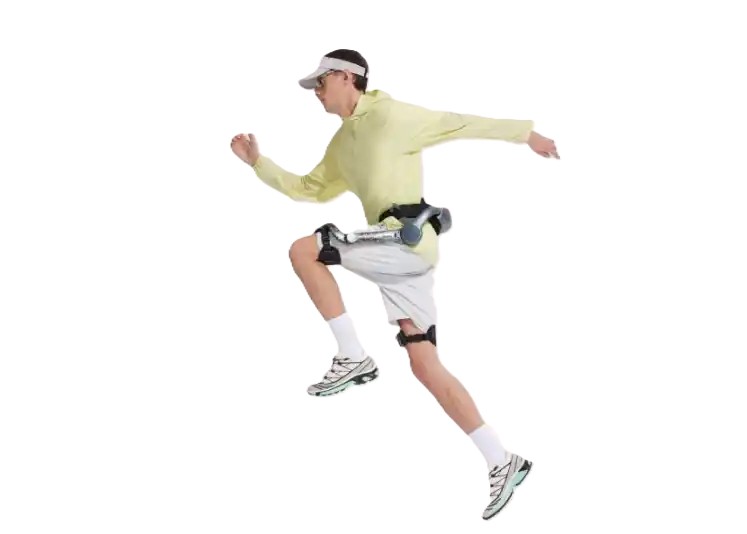
On the consumer side, Sumbu introduced a range called Exo-S3 at CES, describing it as a dual-vector exoskeleton built for everyday movement.
Martin Hsu, founder and CEO of Sumbu, said: “The dual-vector drive means their exoskeleton automatically adjusts between power modes for uphill climbs, using stairs, and cycling.”
The range, which includes the S3, S3 Pro and S3 Ultra, targets activities such as walking, hiking and cycling. Instead of supporting a single joint or motion, the system provides assistance across knee and hip movement, adjusting output based on gait and terrain.
This approach reflects a broader rethink in consumer exoskeleton design. Earlier systems often felt mechanical, rigid or limited to specific motions. Sumbu’s focus is on adaptability, with sensors and software responding to how the wearer moves rather than imposing a fixed pattern. The ambition is modest but practical: reduce fatigue and strain during extended activity without turning movement into a managed process.
CES also revealed how diverse the exoskeleton category has become. The exhibitors span medical therapy, logistics, outdoor activity and workplace support. Companies like German Bionic, Ottobock’s SuitX, Skip, Hypershell, WIRobotics, Dnsys and ULS Robotics each target different environments, from factories and warehouses to hiking trails and rehabilitation clinics.
German Bionic, for example, focuses on occupational support with its Exia exoskeleton, designed to reduce strain during lifting and repetitive tasks in logistics, production and care environments. The system builds on years of industrial deployment rather than consumer experimentation, and its presence at CES reflects growing interest in workplace ergonomics beyond traditional safety gear.
ULS Robotics’ Viatrix range, recognised in the CES Innovation Awards in the Robotics category, takes a different route. It is aimed at walking support and outdoor activity, with modes tailored to terrain and pace. The emphasis is on endurance and joint relief rather than speed or performance, a theme echoed across several consumer-focused booths.
The variety on show underlined the fact that exoskeletons no longer fit neatly into a single category. Medical systems prioritise measurement and compliance. Industrial platforms focus on durability and task-specific assistance. Consumer devices chase comfort and ease of use.
Events around CES reinforced that fragmentation. Tonight’s (Tuesday night) traditional CES preview event Showstoppers, which often surfaces early-stage and transitional products, will host a demo from Vastnaut. The company positions its wearable robotics between clinical support and everyday mobility, exploring how walking assistance can extend beyond therapy settings.
Shenzen-based Vastnaut describes its work as focused on wearable robotic systems that assist human movement, with exoskeleton designs intended to reduce effort and support endurance during walking and physical activity. The company says its aim is to combine mechanical support and sensing to help people move more efficiently in everyday and outdoor settings.
Across the show floor, conversations with exhibitors shared a common theme: comfort remains the hardest challenge. Battery life still defines how long devices can be worn in real conditions. Power delivery must align closely with natural movement, or the system becomes tiring rather than helpful.
CES has often been a place where technologies appear before they settle into clear roles. Exoskeletons appear to be at that stage now. The hardware feels closer to finished equipment, even when the market is still forming. Some systems will remain specialist tools in clinics and workplaces. Others may find stable but limited roles in everyday mobility and fitness.
* Arthur Goldstuck is CEO of World Wide Worx, editor-in-chief of Gadget.co.za, and author of The Hitchhiker’s Guide to AI – The African Edge.