



Product of the Day
Build an AI factory without blowing a fuse
A reference design by Schneider Electric and AMD shows operators how to match high-density computing with the required power, cooling and software.

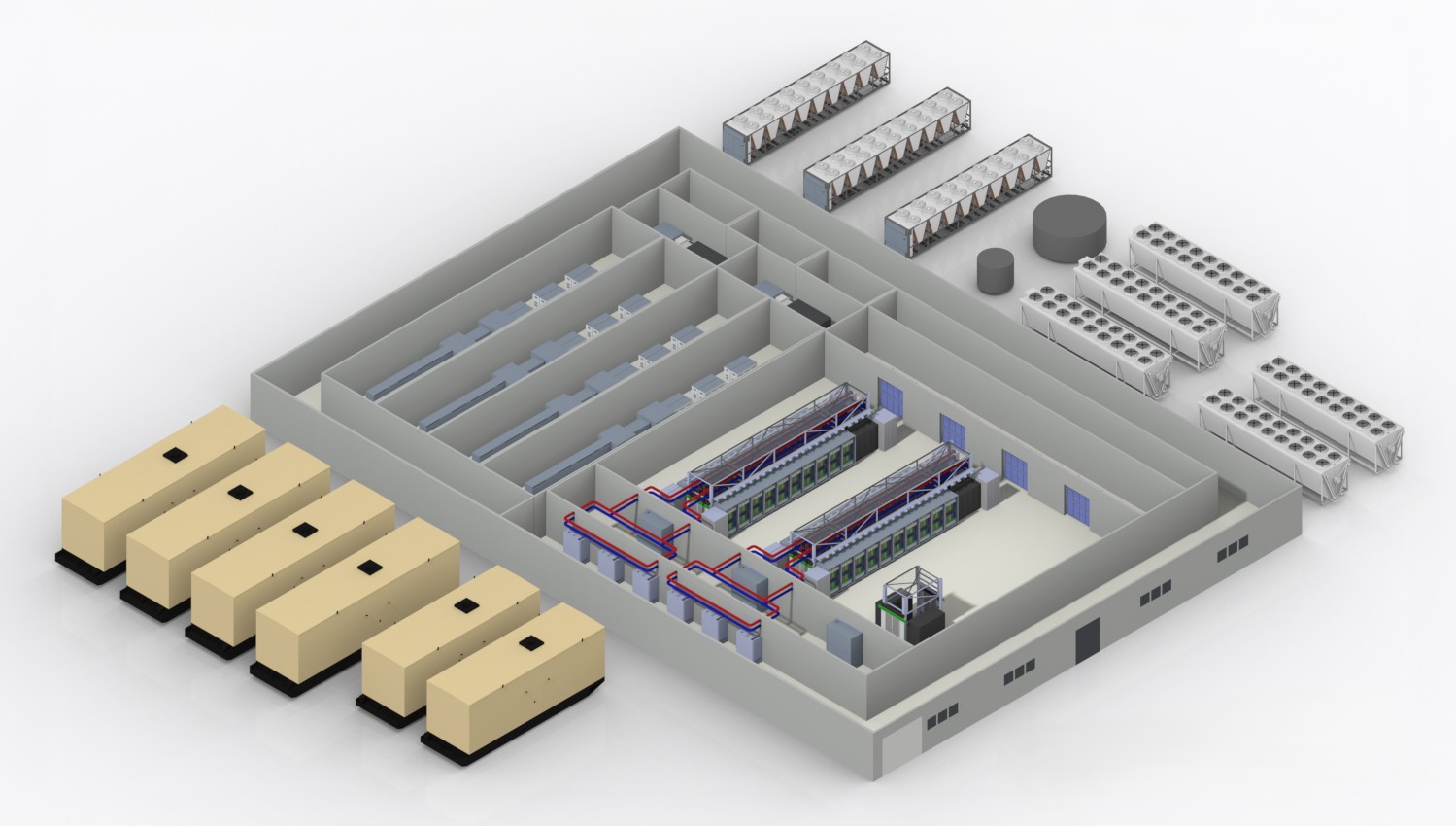
Schneider Electric and AMD have published the first reference design for the AMD Helios rackscale platform. The blueprint defines how power, cooling, IT space and management software can be combined for new and retrofitted AI data centres.
Helios uses AMD Instinct MI455X graphics processing units, sixth-generation AMD EPYC processors, AMD Pensando Vulcano network interface cards and the open ROCm software ecosystem.
AI systems place unusually high demands on data centre power and cooling infrastructure. Reference designs model physical infrastructure before deployment, helping operators plan for power density, heat management and operational complexity.
The Helios design supports modular, multi-cluster environments, with AI clusters of up to 10.4MW of IT capacity for greenfield deployments. Individual racks can support AI workloads of up to 246kW.
“Today organisations require comprehensive, AI-ready reference designs that can take them from planning to deployment faster and with less risk,” says Manish Kumar, Schneider Electric executive VP for secure power and data centres. “Through our collaboration with AMD, we’re delivering an engineering-backed reference design that bridges the gap between advanced AI compute platforms, energy tech, and real-world data centre implementation, enabling customers to deploy scalable, high-density AI environments with greater confidence, efficiency, and speed.”
Cooling options include Motivair by Schneider Electric coolant distribution units and hybrid air-and-liquid systems. According to the companies, these approaches can remove up to 84% of the heat generated by the equipment.
ETAP and EcoStruxure IT Design computational fluid dynamics simulation tools were used to validate the electrical and thermal designs. The digital infrastructure supports real-time monitoring and analytics, AI-assisted predictive maintenance and system-level optimisation across power, cooling and IT equipment.
An integrated electrical digital twin can model and track infrastructure performance. AVEVA Unified Operations Centre provides operational monitoring and visibility.
Forrest Norrod, AMD executive VP and general manager of the Data Center Solutions Business Group, says: “AI infrastructure is rapidly moving to full-scale AI factories, and that requires compute, networking, power and cooling to be designed together from the start. AMD Helios provides an open, rack-scale architecture built to deliver the performance, efficiency and flexibility required for next-generation AI workloads. By working with Schneider Electric to create a validated reference design, we are giving customers a practical blueprint to accelerate high-density AI deployments, reduce integration risk and scale with greater confidence and efficiency.”
The design covers purpose-built facilities and retrofits, allowing operators to plan infrastructure around high-density AI deployments in new or existing data centres.
Schneider Electric says the design can achieve a power usage effectiveness ratio as low as about 1.12 at full load. The reference design has been validated against ANSI standards for US deployments. Support for IEC standards, extending the framework to other markets, is planned.
* Download the AMD Helios reference design on the website here.