


GadgetWings
Can you feel your drone?
South Korean researchers are giving drone pilots a new way to keep tabs on their aircraft, writes GINA CASE.

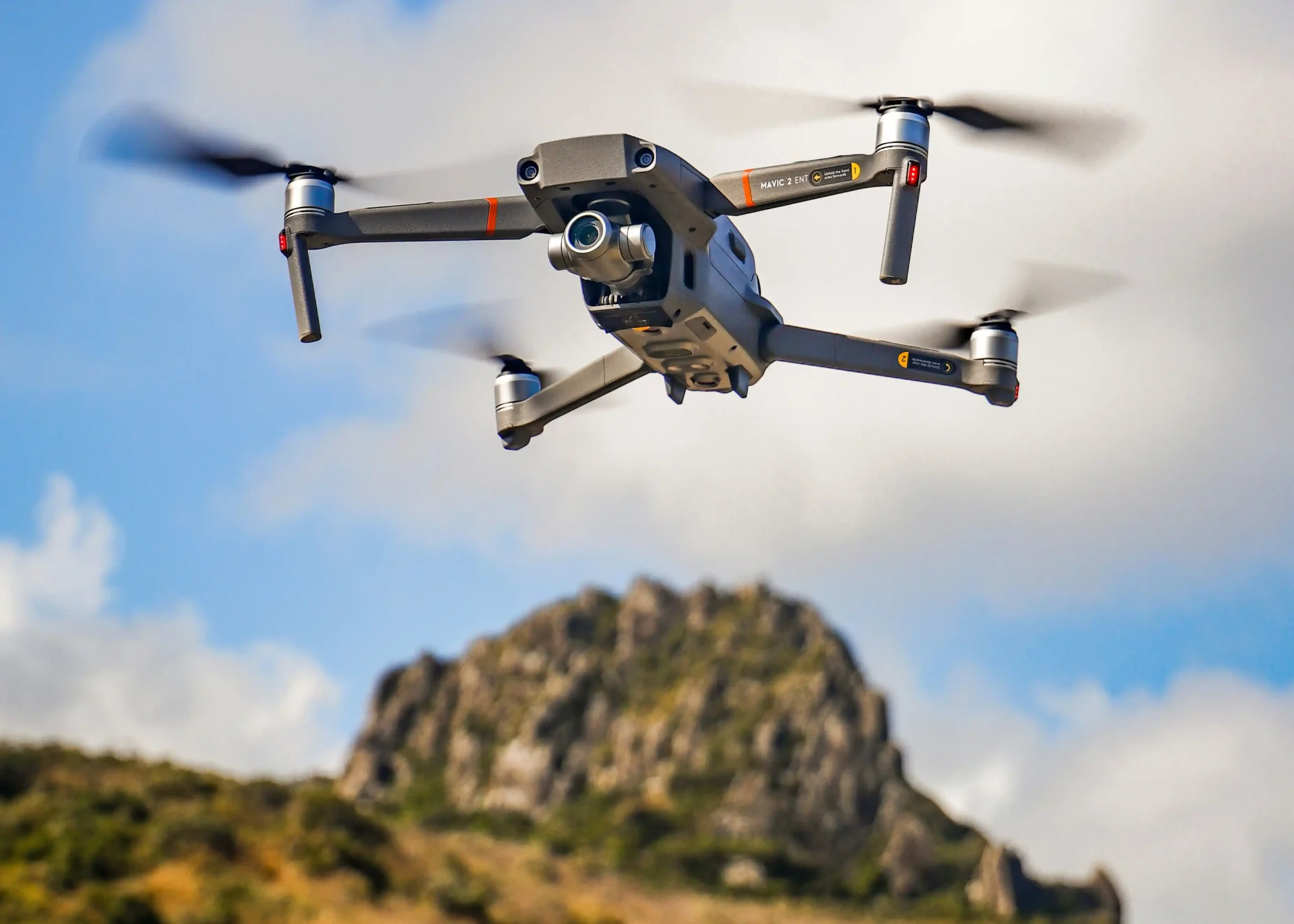
Keeping track of a drone could become a gut feeling, thanks to a vibrating belt developed by researchers in South Korea.
The prototype, developed at Jeonbuk National University, combines hand gestures with touch-based feedback. A sensor worn on the back of the hand recognises flight commands. A belt containing 36 vibration motors feeds information back tothe operator, translating thedrone’s position into patterns felt around the abdomen. Early tests suggest people can learn to read those patterns well enough to guide an aircraft. The waistline has been promoted to flight instrument.
The research addresses a problem in manual drone operation: pilots have to coordinate their controls with visual information about the aircraft. Looking at a screen also competes with watching the surrounding environment. The Jeonbuk team is investigating how much of that information can travel through another sense. The aircraft gets its instructions from the hand and sends its whereabouts tothe belly.
Professor Kee-Ho Yu, of the university’s Department of Aerospace Engineering, led the research with Myeong-Ho Shin and Dr Giancarlo Eder Guerra Padilla. Their study, “Wearable Human–Drone Interface: Gesture-Based Control and Vibrotactile Spatial Awareness”, was published in IEEE Robotics and Automation Letters. The paper was made available online on 12 June 2026 and appeared in Volume 11, Issue 9 of the journal.
“The aim was to connect the user’s intention with clear information about thedrone’s position, rather than improving commands or feedback in isolation,” says Yu. “The hand sensor lets the user issue commands through familiar movements, while the waist-worn device communicates spatial information through touch.”
A computer interprets 12 hand gestures as drone commands. Information transmitted by the aircraft becomes vibration patterns indicating its direction and relative height, along with its distance from the user. Pilots have a small vocabulary of movements to learn, along with the belt’s vibrating replies. Waving at the aircraft is only half the job.
The gesture-recognition model achieved 97.58% accuracy in the researchers’ tests. That figure describes the system’s ability to identify gestures, a separate measurement from a pilot’s ability to understand the vibrations or complete a flight successfully.

Practice helped users become quicker at flying in simulation. Twelve novice users took part in a task involving navigation between designated points, with average completion time falling from 263 seconds on the first attempt to 186 seconds on the fifth. That is an improvement of about 29%, achieved over five attempts. Even with a controller strapped tothe back of the hand, a little rehearsal helps.
The belt underwent a separate indoor test involving 12 participants and 1,200 trials without visual guidance. Participants correctly identified the complete combination of direction, height and distance in 82.75% of trials, taking an average of 3.1 seconds to respond. They recognised direction more reliably than distance, which proved the most confusing part of the information conveyed through the belt. Working out which way thedrone had gone was easier than judging how far it had wandered.
The computer was highly accurate at reading hand movements, but users had greater difficulty decoding the spatial information sent back to their bodies. Improving the belt’s messages will be central to making the interface easier to operate.
Tests with a real drone brought a further limitation into view. Just one novice participant took part in this stage, using gesture control with either visual information or tactile feedback alone. With visual feedback, the participant reached the target in all nine trials, taking an average of 31.4 seconds.
Using touch alone, the participant succeeded in eight of nine trials, with an average completion time of 45.1 seconds. The tactile approach therefore demonstrated that the task could be completed, although it was slower and one attempt was unsuccessful. A larger group of pilots would be needed to establish how consistently other people could reproduce that performance.
In another real-drone task, the same participant had both vision and hearing blocked. The participant successfully returned the aircraft to its target zone after all eight occasions on which it crossed the boundary. This provides an additional demonstration of position feedback through touch under the test conditions.
The researchers identify infrastructure inspection and search-and-rescue support as possible future applications. Such work could benefit from an operator being able to receive aircraft-position information through the body and keep their eyes on their surroundings. Training is another proposed use, although the study tested none of these applications.
Moving from an experimental interface to equipment for those jobs will require larger studies in varied outdoor conditions. The team also identifies comfort and safety as areas needing further work, alongside faster responses and clearer distance information. An aircraft’s position may be communicated successfully in a controlled task, but reliable operation in a working environment requires broader evidence.
“Touch-based feedback is promising, but the results also show where the system needs improvement, especially in communicating distance and reducing response delays,” says Yu.