


Artificial Intelligence
Oracle AI World: Trust is
the new bottleneck of AI
A fast food case study reveals that earning trust in AI is harder than developing the AI itself, writes ARTHUR GOLDSTUCK from Las Vegas.

Las Vegas is one of the culinary capitals of the world, hosting an extraordinary concentration of internationally acclaimed restaurants. So one would not expect the keynote address at one of the world’s biggest AI conferences, held in Vegas, to showcase a fast food chain.
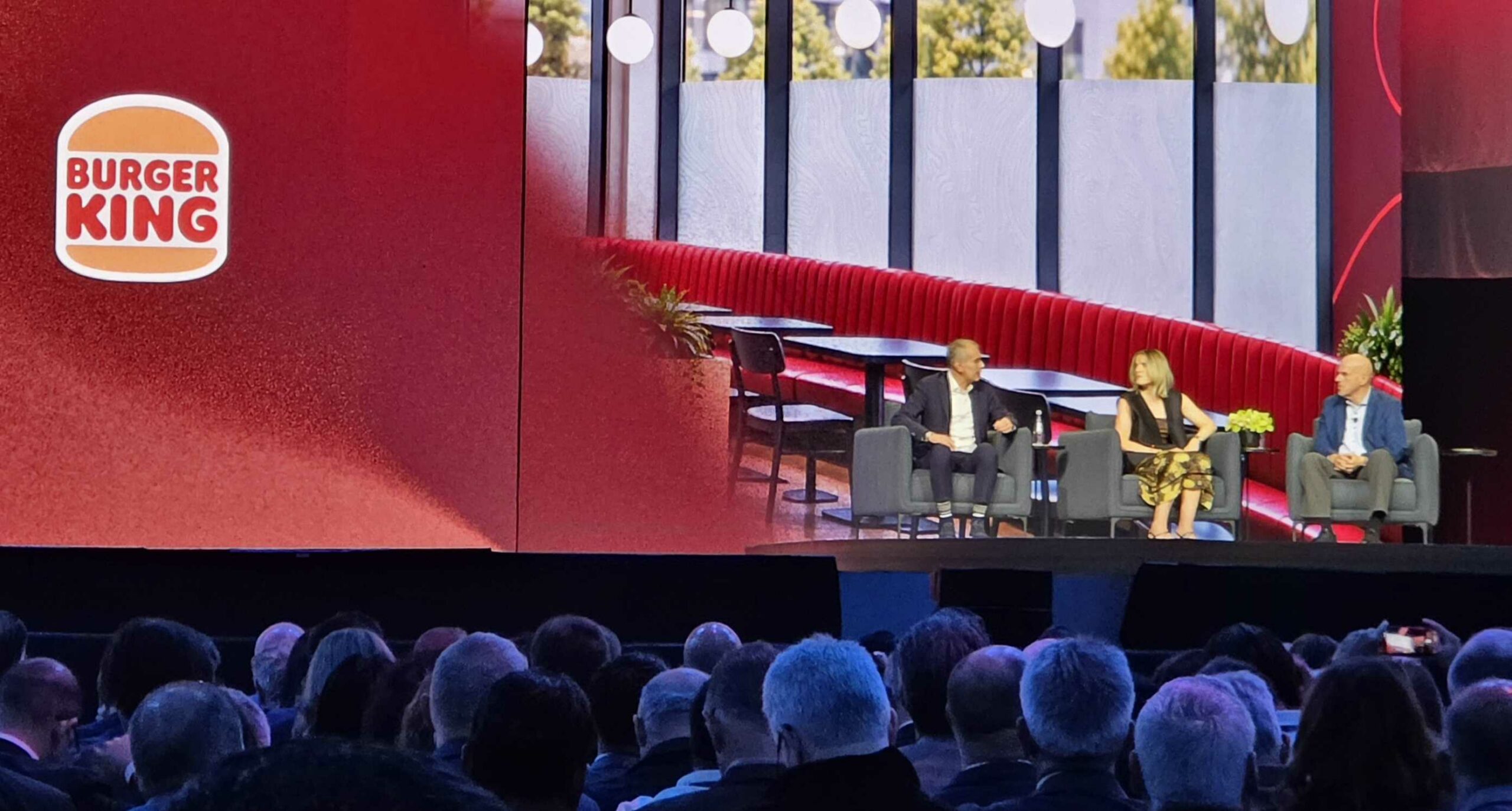
But there it was, at Oracle AI World last week: During the opening keynote by Oracle co-CEO Mike Sicilia, he invited onto stage Fabio Fazzino and Sophie Buresi, respectively group CIO and head of AI at QSRP, which holds the franchise rights for Burger King in Europe.
But it all made sense when the executives revealed one of the biggest obstacles to getting AI into their everyday business operations: employees have to trust the technology before they will rely on it. And earning that trust has proved harder than developing the AI itself.
“With the Oracle team, we studied and developed several AI agents that can use our data to improve operations in our restaurants,” said Fazzino. “This agent, by cross-referencing data such as sales, can warn me before a product runs out. This helps us act in time and prevent further lost sales.
“The second agent is about misbehaviour. This agent is able to highlight unusual transactions, collect relevant data so that our people can check, understand what’s happened and decide what to do next.”
Another agent compares photographs of disputed deliveries to help establish responsibility for complaints.
Buresi said: “We had a lot of ideas around AI use cases, but we decided to follow the guidance of the operations teams. The restaurant teams, the restaurant managers, they’re really the ones telling us what we should focus on and how to approach these issues.”
From the start, they became aware of a obstacle that is not related to the software itself.
“Even if you have good data, AI and a useful product, you need to have trust from the ops teams so that the use case, the product, is actually used.
“And it’s not something easy to get. That’s why we’re working together with Oracle, with the restaurant teams, every day, every week, to collect the feedback and really make sure that we earn trust.”
The unlikely pairing of Oracle and Burger King highlighted a problem at the heart of AI adoption: companies can invest millions in systems that perform extraordinary tasks, but those investments may be wasted if employees don’t trust the technology enough to use it.
Sicilia said: “Trust is what allows AI to work where the stakes are highest, and therefore the benefits will be the greatest.”
On the opening day of Oracle AI World, the company announced a new Deep Trust AI Architecture that is designed to prevent AI agents from bypassing a company’s existing security controls and business rules, even when they access corporate databases directly.
Juan Loaiza, Oracle’s executive vice-president for AI Database Technologies, said in the announcement: “AI trust is the biggest challenge we face today.”
In a separate briefing, Gary Miller, Oracle’s customer success chief, said Oracle was increasing its use of AI to search its own software for flaws.
“We’ll have one model that will find a vulnerability. We’ll have another model check that it’s a real vulnerability. And then we’ll have the models code the fix and test the fix.”
He said Oracle had issued more than 3,000 fixes in a recent quarterly patch update. He told Gadget that not all the vulnerabilities were found by AI
“The interesting thing is that we’ve been running nearly every (AI) model we can against all of our codebase. We have 300 products. But some of the known vulnerabilities that humans found were not being found by the models.
“So now we are using our experts to fine-tune that. They’re giving the models hints like, hey, you should look for this, and you should look for that. So it’s a combination of humans and the frontier models finding issues.”
Spectrum, the American telecommunications group, uses AI assistants for HR requests among its approximately 100,000 employees. Its representative said sensitive decisions like pay changes remain under human control, and a dedicated team reviews responses daily for errors. It might be costly, but it retains employee trust.
“Trust isn’t something we can announce,” said Sicilia. “It’s something that we must earn.”
* Arthur Goldstuck is CEO of World Wide Worx, editor-in-chief of Gadget.co.za, and author of “The Hitchhiker’s Guide to AI – The African Edge”.