


GadgetWheels
Chery leads changing of
the guard at Rosslyn
Chery’s opening of a plant on the site where Nissan built cars for six decades represents a watershed in SA motor manufacturing history, writes ARTHUR GOLDSTUCK.

When Chinese car maker Chery opened the doors of its Rosslyn manufacturing plant in Pretoria on Friday, the symbolism was stark.
Nissan, a stalwart of the era in which Japan, Europe and the United States ruled the South African motor industry, had handed the keys to the high-tech leader of the new era.
Nissan built vehicles on this site for six decades. Chery, whose stable of brands trails only Toyota in South African sales, will build the next generation. The moment defines how dramatically the industry’s centre of gravity has shifted towards China.
The address itself tells the story. The Rosslyn facility was built in 1963, in what became the country’s first dedicated automotive manufacturing hub, and assembled Datsuns, and then Nissans, for six decades. At its peak in 2012, it turned out 54,000 vehicles a year. By the time the last Navara bakkie left the line, annual output had slipped below 25,000, and Nissan’s global retrenchment had sealed the plant’s fate.

In January, Nissan announced the sale of the land, buildings and nearby stamping plant to Chery South Africa. The Competition Tribunal approved the deal on 30 June, with conditions attached on employment and local procurement. Four days later, a few hundred guests gathered in the winter chill of Pretoria to watch the reemergence of the plant under a new logo. Of equal significance to the continued production of vehicles on the site, it was announced that the entire 692-strong Nissan workforce would be included in the takeover.
“This transition brings stability, hope and the opportunity to continue contributing to South Africa’s manufacturing future,” said Massimo Magana, who addressed the ceremony on behalf of the plant’s employees. “As employees, we recognise both the significance of this moment and the responsibility that comes with it. We bring decades of experience, dedication, craftsmanship and pride in what has been built here at Rosslyn over many years.”
The word “stability” was a counterpoint to the tension of the past two years, in which the workforce watched Nissan wind down production.
“This investment reaches far beyond the walls of this plant,” said Magana. “It creates opportunities for local suppliers, strengthens surrounding communities and reinforces South Africa’s position as a strategic automotive manufacturing hub on the African continent.
“Together, we are not simply witnessing a transition – we are helping shape the future of automotive manufacturing in South Africa.”

The new shape of the future
That future has a distinctly different shape to the past. For most of Rosslyn’s six decades, the South African motor industry belonged to Japan, Europe and the United States: Toyota in Prospecton, Volkswagen in Kariega, Ford in Silverton, Mercedes-Benz in East London, and BMW just down the road in Rosslyn itself.
Chinese vehicles, when they appeared at all, were treated as curiosities. Chery’s own first attempt at this market, in 2008, ended in retreat. Its return in 2021 has produced a different result: the group is now the second-largest vehicle seller in the country, behind only Toyota, and its Tiggo 4 Pro was the best-selling passenger car of 2025.
In May, the Jetour T2, from a sister brand in the Chery stable, became the first Chinese vehicle to be named South African Car of the Year. Across its six local brands, the group has put more than 140,000 vehicles on South African roads in four years, sold through 198 dealerships.
Chery chairman Yin Tongyue, one of the group’s founders, travelled to South Africa for the launch.
“At Chery, we live by one philosophy: ‘In Somewhere, For Somewhere, Be Somewhere’,” he said. “It means that wherever we invest, we commit. We become part of the local economy, part of the community and part of the country’s future.
“The Rosslyn plant … carries the proud heritage of South Africa’s automotive industry. We take that legacy seriously. Our responsibility is not only to preserve this facility, but to strengthen it and ensure it continues creating value for the people of South Africa.”

The plan is concrete. Chery will retrofit and upgrade the plant, with the first locally built vehicles, starting with the Tiggo 4 Cross, expected in mid-2027. The ramp-up target for the second half of that year is 15,000 units, on the way to an annual capacity of 50,000. The company is targeting 40% local content by 2028, and its stated ambition is to exceed 100,000 annual vehicle sales in South Africa.
That 40% figure took on unexpected significance when Chinese ambassador Wu Peng addressed the gathering.
“Starting on 1 May this year, China officially implemented zero-tariff treatment for all African countries that maintain diplomatic relations with China,” he said. “If locally manufactured vehicles achieve a 40% local content rate, they will qualify for these tariff benefits when exported to China. Please pay close attention to this. It represents a significant business opportunity for South African manufacturers and for our long-term cooperation.”
Could a plant that once shipped Navaras into Africa one day ship South African-built Chinese cars into China itself? That is the carrot held out by the Chinese ambassador.
Assembly alone is not enough
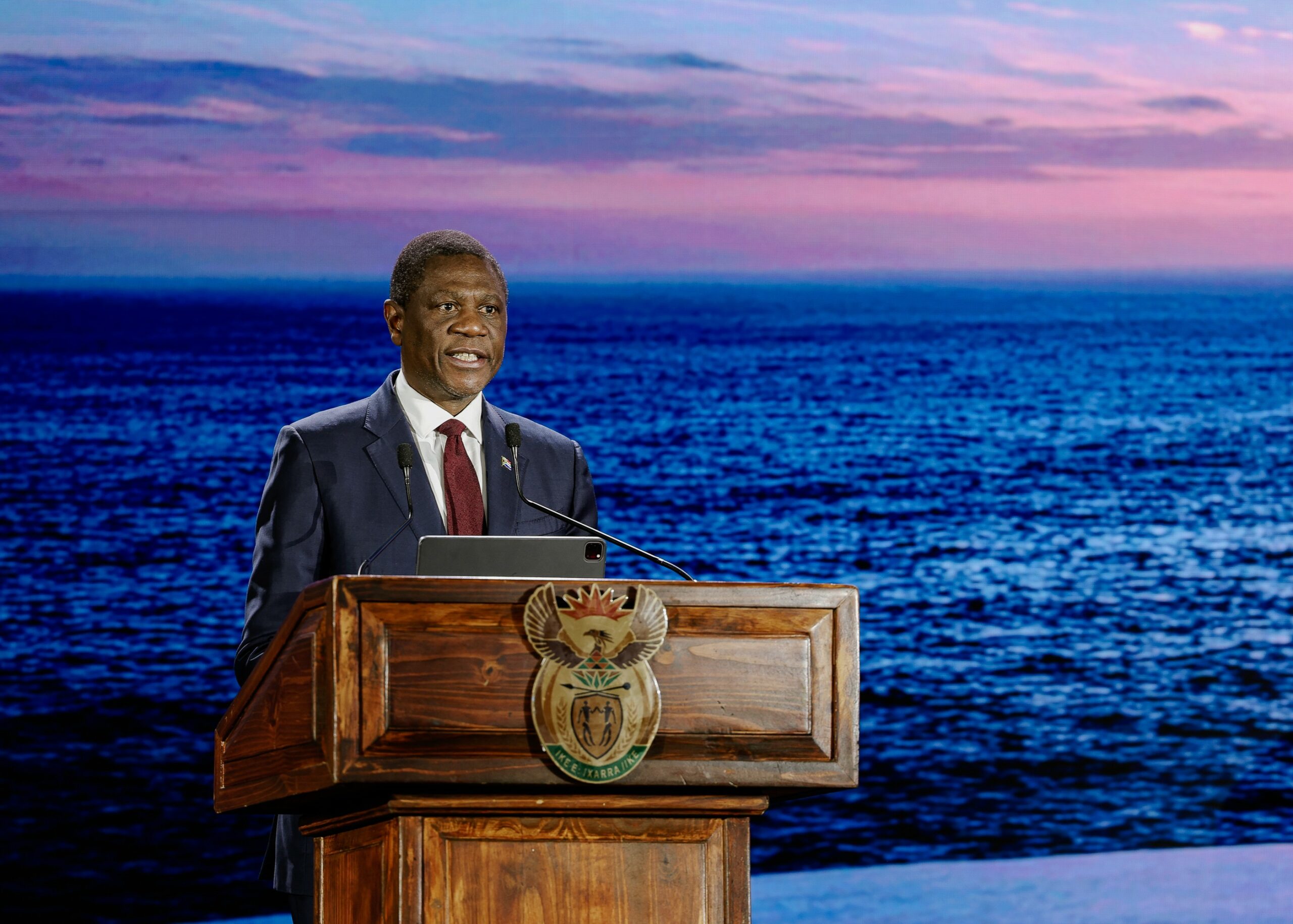
South Africa’s deputy president Paul Mashatile delivered the keynote address, alongside Gauteng premier Panyaza Lesufi, Tshwane mayor Nasiphi Moya and the ambassador, giving the occasion the feel of a state visit as much as a factory opening.

The deputy president appeared to respond directly to the ambassador’s challenge: “We must distinguish between simple vehicle assembly and meaningful localisation,” he said. “Assembly alone creates limited economic impact. Localisation delivers significantly greater benefits. It creates employment multipliers. It strengthens industrial supply chains. It promotes skills development across generations.
“With that in mind, government calls on Chery to work closely with us in identifying and developing local suppliers – particularly businesses led by young South Africans.”
The distinction is the difference between bolting together imported kits and building an industrial base, and it will be the measure against which this investment is ultimately judged. Mashatile also acknowledged the unease that foreign acquisitions of local manufacturing assets can generate.
“While these investments are welcomed because they bring capital, technology and expertise, they also raise important questions about maintaining strong local ownership and protecting our domestic industrial base. This facility therefore becomes a beacon of hope, skills development and opportunity for young people from communities including Mabopane, Soshanguve, Ga-Rankuwa and Hammanskraal.”

An address by Chery executive vice president Zhang Guibing was, in turn, perfectly in sync with the South African concerns.
“We have retained all existing employees to ensure seamless operations while aiming to create nearly 3,000 direct jobs, together with many more indirect jobs throughout the manufacturing supply chain and related services in the years ahead,” he said. “To increase localisation, we have launched a supplier development programme, partnering with South African suppliers as we work towards achieving a 40% local content target.
“At Chery, we believe that true globalisation means becoming local and growing sustainably.”
The stakes reach well beyond one factory. The automotive sector supports more than 400,000 jobs across its value chain and accounts for over a fifth of the country’s manufacturing output. For sixty years, the decisions that governed those livelihoods were made in Yokohama, Wolfsburg, Munich, Dearborn and Toyota City. A growing share of them will now be made in Wuhu, the eastern Chinese city where Chery was founded in 1997, and where a state-owned upstart once reverse-engineered its first engines before becoming China’s top vehicle exporter for 23 consecutive years.
Mashatile left the new owners with a standard by which the country will keep score of their presence in South Africa: “The Chery Rosslyn Plant must never be judged only by the vehicles that leave its production lines. It must also be judged by the lives it changes, the families it supports, the communities it uplifts, and the contribution it makes to South Africa as a whole.”
* Arthur Goldstuck is CEO of World Wide Worx, editor-in-chief of Gadget.co.za, and author of “The Hitchhiker’s Guide to AI – The African Edge”.