


Artificial Intelligence
AWS re:Invent: Agentic AI recharges legacy upgrades
New agentic AI tools in AWS Transform, announced in Las Vegas this week, promise quicker modernisation of legacy software, writes ARTHUR GOLDSTUCK.

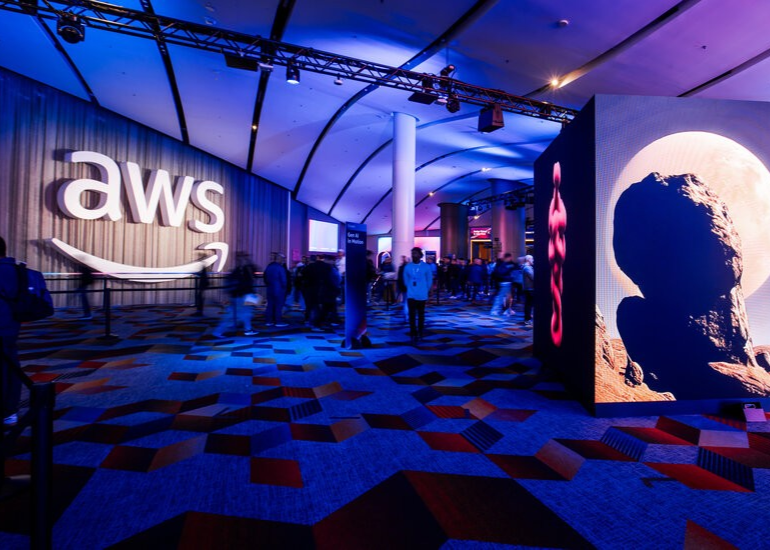
AWS has expanded its Transform platform with major new features that shift legacy modernisation from a slow, risky undertaking to a far more manageable process. The company introduced the updates at the AWS re:Invent 2025 conference in Las Vegas on Monday, promising that agentic AI can now take on large parts of the work traditionally left to over-stretched engineering teams.
The most striking change is the new Transform Custom capability, which allows businesses to modernise entire codebases at once, regardless of language or framework. Instead of rewriting the same patterns repeatedly across dozens of repositories, teams can define these patterns once and let Transform apply them automatically, at scale.
AWS says early adopters achieved as much as an 80% reduction in execution time compared with manual processing. The system can now handle runtime upgrades for Java, Python and Node.js, convert outdated libraries, update APIs, and rebuild infrastructure definitions written in CloudFormation, Terraform or CDK.
Transform also gains full-stack Windows modernisation, aimed at companies that still run older Windows-based enterprise apps. AWS says that this approach can accelerate a full-stack Windows upgrade by up to five times while cutting licensing and maintenance costs by as much as 70%.
For companies still dependent on mainframes, Transform now provides automated analysis, decomposition and re-platforming of COBOL and JCL workloads. It maps the structure of monolithic applications, identifies business rules, and converts them into cloud-native equivalents while generating extensive test coverage for validation. According to AWS, early customers cut typical mainframe modernisation timelines by a factor of four, moving from multi-year plans to far shorter project cycles.
These features are already in use by companies like Air Canada, Experian, QAD, Teamfront, Thomson Reuters and Verisk, all looking to reduce their technical debt and redirect engineering time toward product development.
The South African relevance is impossible to miss. VMware’s decision to move smaller customers off long-standing contracts has left many local organisations stuck on ageing virtualised environments with rising costs and diminishing support.
Legacy Windows systems, outdated SQL Server licences and long-running virtual machines have suddenly become more expensive to maintain. The new Transform capabilities give those companies something they have lacked for years: a realistic and less risky way to exit legacy estates without rewriting everything by hand.
“Many companies still rely on systems written for a world that no longer exists,” says Matt Wood, vice president for artificial intelligence products at AWS. “Transform gives them a practical path to replace that foundation while keeping their businesses running.”
The promise is that modernisation no longer requires a complete rebuild, an army of specialists or years of disruption. With Transform’s expanded capabilities, AWS is positioning AI as the engine that turns “tech debt” – the backlog created when old systems and shortcuts pile up over time – into an upgrade plan.
- For more information, visit at aboutamazon.com.
* Arthur Goldstuck is CEO of World Wide Worx, editor-in-chief of Gadget.co.za, and author of “The Hitchhiker’s Guide to AI – The African Edge”.