



Hardware
Apple upscales iPhone line-up
with first foldable
Apple’s 2026 iPhone line-up starts above US$1,000, led by its first foldable and two Pro models, writes GUIDO RUSSO.
Apple has unveiled its most top-heavy iPhone line-up yet, with no standard iPhone 18 in the September launch and a US$1,999 foldable at the top.
The new iPhone Duo joins the iPhone 18 Pro and Pro Max as the only new models announced for September. The Pro starts at US$1,199 and the Pro Max at US$1,299, leaving Apple’s latest generation concentrated entirely at the premium end of the market.
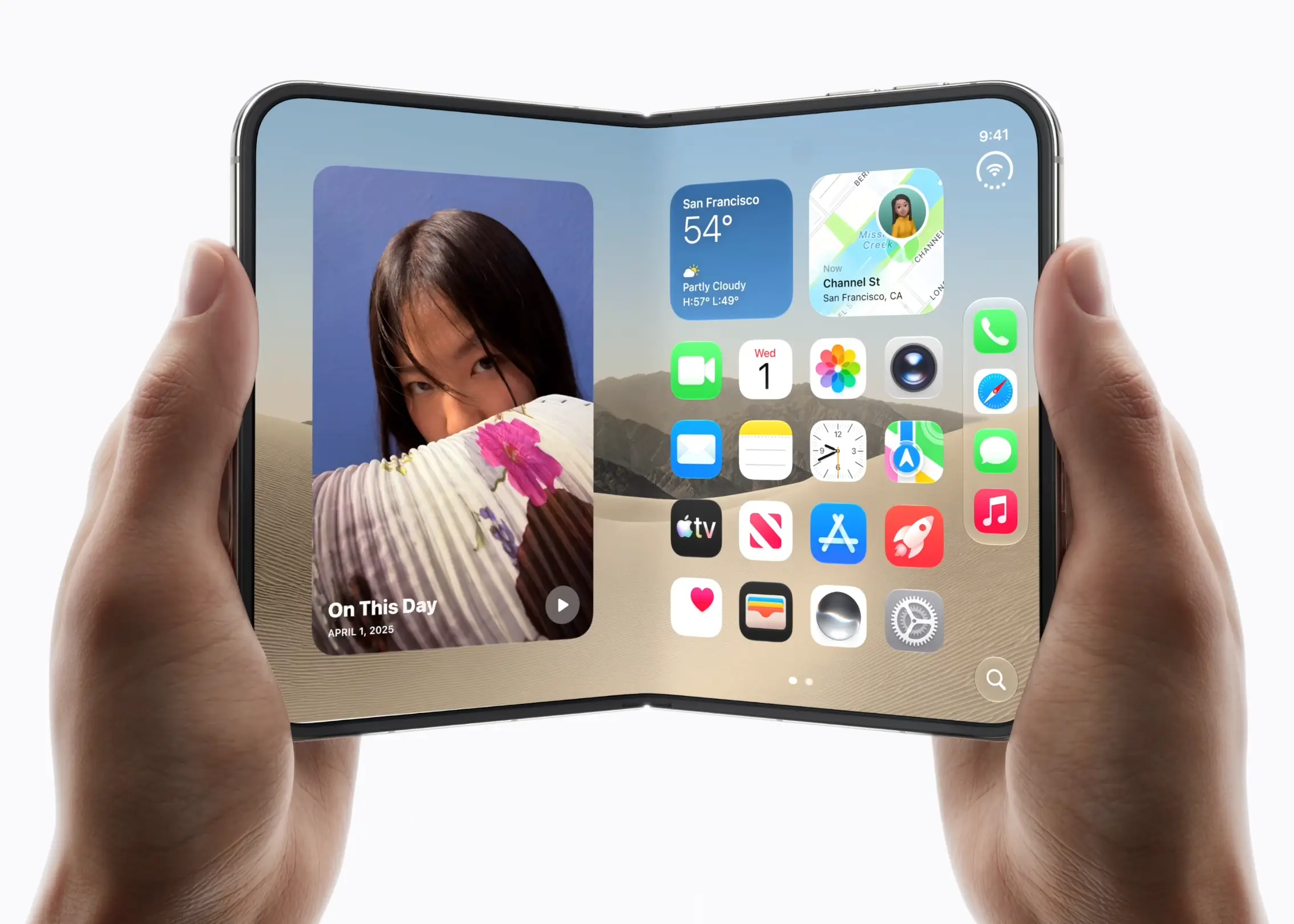
The Duo gives Apple an even more expensive tier. It is the company’s first folding iPhone and opens book-style to reveal a 7.6-inch display, while a 5.4-inch outer screen allows it to be used as a conventional handset when closed.
The standard iPhone 18 was absent from the launch. Apple has given no release date for it. Reports on the day of the event indicated Apple plans to launch the regular iPhone 18 in the first quarter of 2027.
The Duo is Apple’s first attempt at a book-style foldable. Closed, it has a 5.4-inch outer Super Retina XDR display. Open it and the inner screen expands to 7.6 inches, which Apple says provides 50% more screen area than the 6.9-inch display on the iPhone 18 Pro Max. Both displays support ProMotion refresh rates, Always-On display and peak outdoor brightness of 3,000 nits.

Apple has addressed the crease, one of the most obvious compromises on folding phones, with a nano-texture finish on the inner display. The company says it reduces glare and makes the crease less visible. The screen uses a custom polymer cover layer and glass above and below the folding panel, while the hinge contains more than 100 components.
The folding design also changes how the phone is unlocked. The Duo uses Touch ID in the side button instead of Face ID, although it can also be unlocked with an Apple Watch. It becomes the first iPhone with Apple Pencil support, with compatibility for the USB-C Apple Pencil due later this year.
Apple has adapted iOS for the larger screen. On the Duo, users can run two apps side by side in Split View, open two windows from the same app and save pairs of apps for repeated use. Safari, for example, can occupy one half of the inner display while another app uses the other half.
The second screen also creates new uses for the cameras. Users can take selfies with the higher-resolution rear cameras while seeing themselves on the outer display, while Duo Preview lets the person being photographed see the live image. The rear system combines a 48MP main camera with a 48MP ultra-wide camera, and the main camera also provides a 2x optical-quality view.
Performance comes from the A20 Pro chip, the same processor used in the iPhone 18 Pro models. Apple says the Duo delivers up to 35% better sustained performance than the iPhone 17 Pro, aided by a custom vapour chamber that draws heat away from the processor.
The foldable has a battery on each side of the device. Apple quotes up to 24 hours of general use when the two displays are used equally, 31 hours of video playback on the inner display and 44 hours on the outer display. It can charge to 50% in about 20 minutes by cable or around 30 minutes wirelessly.
The Duo is eSIM-only worldwide, with Apple using the space saved by removing the physical SIM hardware to maximise battery capacity.
Apple has concentrated much of the iPhone 18 Pro and Pro Max upgrade on photography and battery life. Their new 48MP main camera introduces variable aperture to the iPhone for the first time. Six blades inside the camera alter the size of the lens opening, allowing the phone to adjust the amount of light reaching the sensor and the depth of field in a photograph.

Users can also select between four aperture settings manually. Apple’s new Pro controls add manual shutter speed and white balance, along with a histogram for checking exposure. It puts several controls familiar to users of dedicated cameras directly into Apple’s Camera app.
One of the less obvious additions could be important for professional photographers and photojournalists. Apple Reference Image is designed to establish what the camera originally captured. In Reference mode, the sensor records signed image data and creates a reference image that can be viewed alongside an edited version.
The Pro phones also use the 2-nanometre A20 Pro processor and a redesigned vapour chamber. Apple claims up to 40% better sustained performance than the iPhone 17 Pro generation. A dual 16-core Neural Engine handles on-device AI processing, while Apple’s C2 cellular modem uses 15% less energy than its predecessor and provides faster uploads, according to the company.
Battery life receives a sizeable upgrade through new battery designs and the efficiency of Apple’s silicon. On eSIM-only versions, Apple quotes up to 36 hours of video playback for the iPhone 18 Pro and 45 hours for the Pro Max.
Apple says eSIM-only versions also benefit from the space saved by removing the SIM tray, allowing larger batteries and longer video playback. These versions will be sold in countries including the US, Canada and Japan, as well as several Middle Eastern markets. South Africa is not included in Apple’s list of eSIM-only Pro markets.
The Pro models start with 256GB storage and run to 2TB, with black, silver, glacier and burgundy finishes. Pre-orders open on 12 September in more than 65 countries and regions, with availability from 18 September.
The Duo is also offered from 256GB to 2TB, in star white and night sky. Pre-orders begin on 16 October in more than 70 markets and sales begin on 23 October.
South Africa was not named among Apple’s first group of countries for either launch, and local pricing had not been announced at the time of writing. Apple says additional countries will follow after the initial releases.
Software is another common thread. The iPhone 18 Pro models use iOS 27, while the later-launching Duo will ship with iOS 27.1. Siri AI begins its beta rollout in English with iOS 27, with support for more languages to follow. Apple says the redesigned Siri can draw on information in messages, emails and photos and respond to information visible on the screen.
The Duo is Apple’s most expensive new iPhone and its first entry into a folding-phone category that Android manufacturers have been developing for years. Apple CEO John Ternus called it “the most transformational change to iPhone since the original”.