

Gadget of the Week
Gadget of the Week: Small passport to big experiences
Samsung’s passport-sized Galaxy Z Fold8 turned a classic Mini tour of London into a delightful test of how well a phone can travel, writes ARTHUR GOLDSTUCK.

What is it?
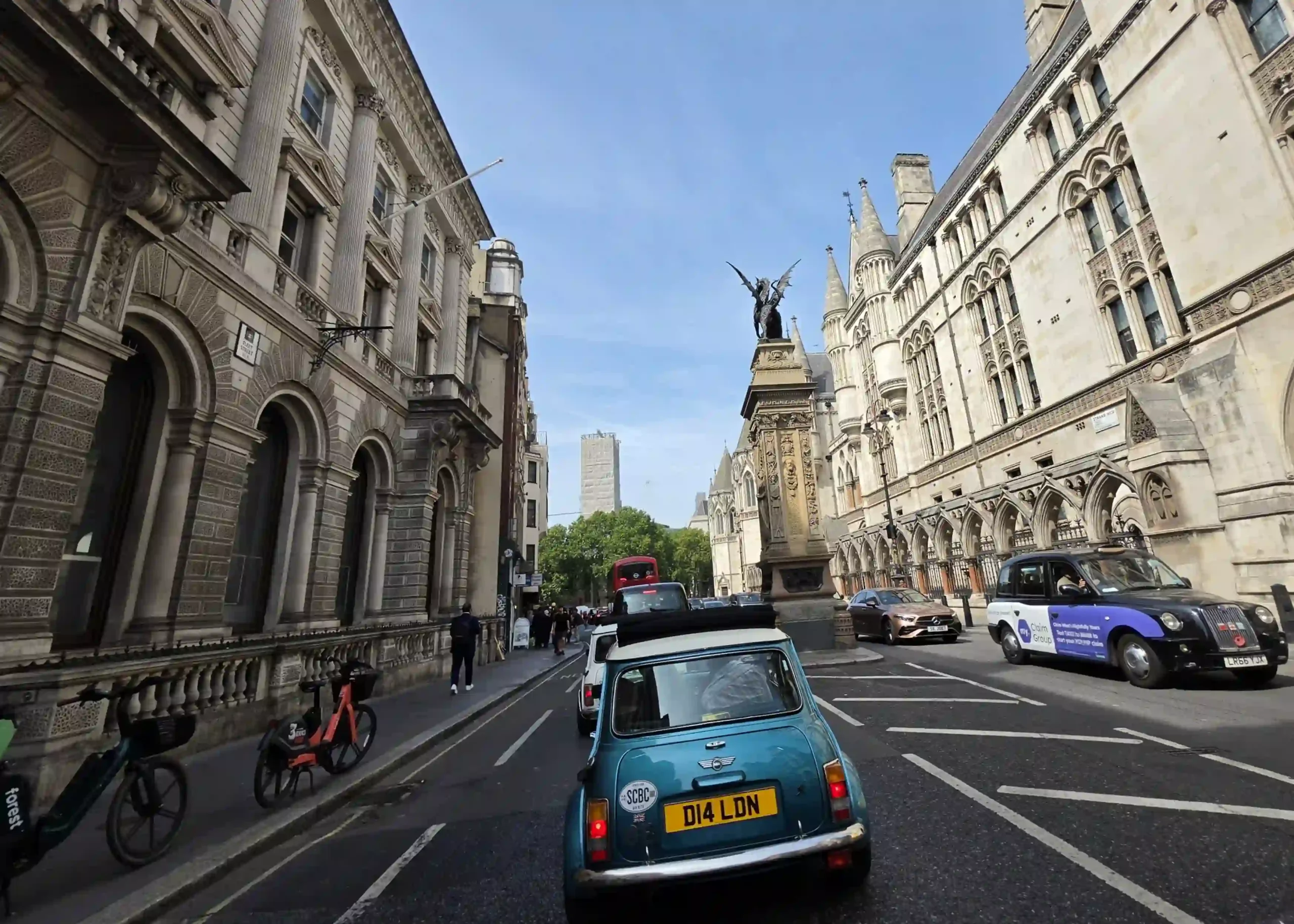
The new Samsung Galaxy Z Fold8 was tested in the least scientific way: from the passenger seat of a classic Mini Cooper as it threaded its way through London.
The device was launched in London last Wednesday as the middle-child of the new Samsung foldable range, comprising the Galaxy Z Flip8, Fold8 and Fold8 Ultra.
On the Small Car Big City tour, the Mini’s open sunroof provided a somewhat unusual camera position. I could lift the Fold8 above the roofline and photograph the upper reaches of buildings from an angle pedestrian seldom get, then swing it towards passing traffic. Drivers and passengers regularly broke into smiles when they spotted the old car, giving me action shots with expressions that portrait mode cannot manufacture.
Along the route, we began calling the phone the Passport. Folded shut, it has almost exactly the dimensions and the name stuck because it made sense: a small passport to big London experiences.
The tour and the phone made a delightful combination. The Mini packed a large experience into a famously small car, while the Fold8 packed two useful screens into an object close to passport dimensions.
Closed, the Z Fold8 measures 123.9mm high and 81.9mm wide, close enough to passport proportions for the nickname to feel obvious as soon as it was said. At 9.7mm thick and 201g, it feels dense and substantial in the hand, yet remained easy to lift through the Mini’s sunroof for a snapshot.

Photo: ARTHUR GOLDSTUCK.
The proportions also hark back to the short-lived but much-loved BlackBerry Passport, launched in 2014 with a broad square screen and physical keyboard. That device measured 128mm by 90.3mm and weighed 196g, putting Samsung’s new Fold within a few millimetres and 5g of its spiritual predecessor.
That’s where all comparisons with the past end.
Its size represents a new branch of Samsung’s Fold family. The Galaxy Z Fold8 Ultra follows the tall book-style design established by previous Fold generations, while the Fold8 is shorter and wider. Its outer screen measures 5.5 inches, with a resolution of 1972 by 1248 pixels. Opening it reveals a 7.6-inch Dynamic AMOLED 2X display with a resolution of 1848 by 2448 and a refresh rate of up to 120Hz.
The cover display uses a 10:16 aspect ratio, while the inner screen opens into a 4:3 format. Both reach a claimed peak brightness of 3,000 nits, and the main display has an anti-reflective coating. These specifications became useful under London daylight, especially when checking photos immediately after taking them.
A phone used from a moving car has little time to impress. The building and the bus appears briefly and then disappears behind the Mini. The camera has to open quickly, focus and capture the moment without calling for a roadside committee meeting.
The Fold8 worked well in that role because its broad cover screen provided a clear view of the scene, while the shorter body felt secure in one hand. The physical proportions also made it easier to move between the car interior and the open sunroof.
The two rear cameras both use 50MP sensors. The main wide camera has an f/1.8 aperture, autofocus and optical image stabilisation. The f/1.9 ultra-wide camera proved especially valuable for the upward views through the sunroof, fitting more of London’s buildings into the image without requiring acrobatics in the passenger seat.
Samsung offers 2x “optical quality” zoom by cropping the main sensor, along with digital zoom up to 10x. A proper telephoto camera would have given the Passport a stronger claim to being a complete travel camera, especially for architectural details across a street or subjects beyond the reach of the Mini.

However, video recording reaches 8K at 30 frames per second, with 4K slow motion available at 120fps and Full HD at 240fps, making for excellent travelogue-style videography. The Fold8 also has a 10MP camera on each screen, allowing video calls and selfies in either folded or open form.
The inner display became valuable after the pictures had been taken. Opening the phone gave me a far better view than usual for checking sharpness, window reflections and unwanted objects near the edge of an image. A photograph that appears successful on a conventional phone screen can reveal a blurred face, a dirty patch of glass or half a traffic light when enlarged.
The screen also helped with video. Clips recorded through a moving sunroof tend to include unexpected jolts and rapid changes in light. Reviewing them on the 7.6-inch display made it easier to decide whether another attempt was needed while the opportunity remained nearby.
Inside, the Fold8 uses the Snapdragon 8 Elite Gen 5 for Galaxy processor, paired with 12GB of memory in the 256GB and 512GB models. It runs Android 17 with Samsung’s One UI 9 software. Connectivity includes 5G, Wi-Fi 7, Bluetooth 6.0, NFC, ultra-wideband and a combination of physical SIM and eSIM support, all useful ingredients in a phone doubling as a premium travel companion.
The 4,800mAh battery kept pace with the camera-heavy outing, despite frequent screen use and repeated opening and closing. Samsung claims up to 26 hours of stored video playback. Charging reaches 45W with a compatible wired charger, while wireless charging is also supported.
Samsung has reinforced the phone with an Armor Aluminium body, Gorilla Glass Ceramic 3 on the cover and Gorilla Glass Victus 2 on the rear. Two layers of titanium lie beneath the folding display, while the Armor FlexHinge has been redesigned to make opening easier. All of this reinforcement proved its worth during inevitable fumbles in the tight confines of the Mini.
The IP48 rating adds protection against water, although fine dust remains a concern for a device containing a hinge and folding screen.
The longer I used the Fold8, the less it felt like a novelty and the more it became a trusty companion I did not want to leave behind.

How much does it cost?
The Samsung Galaxy Z Fold8 costs R40,999 with 256GB of storage and R45,999 with 512GB. South African pre-orders run from 22 July to 12 August 2026. The standard colours are Lavender, Graphite and Cream, with Pistachio sold through Samsung’s online store.
Does it make a difference?
The Fold8 gives Samsung a differentiated foldable instead of a smaller variation of the Ultra. Its passport proportions make the cover screen more useful for photography and everyday phone tasks, while the inner display offers a better way to inspect pictures, follow maps and enjoy content.
What are the biggest negatives?
- The 81.9mm folded width will feel bulky in a narrow trouser pocket when one fits a protective case.
- The absence of a dedicated telephoto camera limits a device that otherwise makes an excellent travel camera.
What are the biggest positives?
- The passport-sized body feels distinctive and manageable, weighing little more than a conventional phone.
- The 50MP wide and ultra-wide cameras produce rewarding photographs on the move.
- The bright 7.6-inch screen enhances photo and video review dramatically.
* Arthur Goldstuck is CEO of World Wide Worx, editor-in-chief of Gadget.co.za, and author of The Hitchhiker’s Guide to AI – The African Edge.