


GadgetWings
Air France two hauls forward, one backward
In-flight entertainment is key to making long-haul flights bearable, but some airlines do not achieve overnight success, writes ARTHUR GOLDSTUCK.

Airlines talk about in-flight entertainment as a perk. On long-haul routes, it is really more of a hygiene factor, making overnight flights or day-long journeys more bearable, especially in Economy Class. Some airlines understand this, offering extensive menus of movies, series and documentaries. Others ration their content, as if it is premium alcohol from Business Class.
However, as aircraft cabins have become more standardised, entertainment has emerged as one of the few areas where airlines still try to differentiate. Partnerships with well-known content providers offer a shortcut, borrowing brand equity rather than rebuilding a catalogue from scratch.
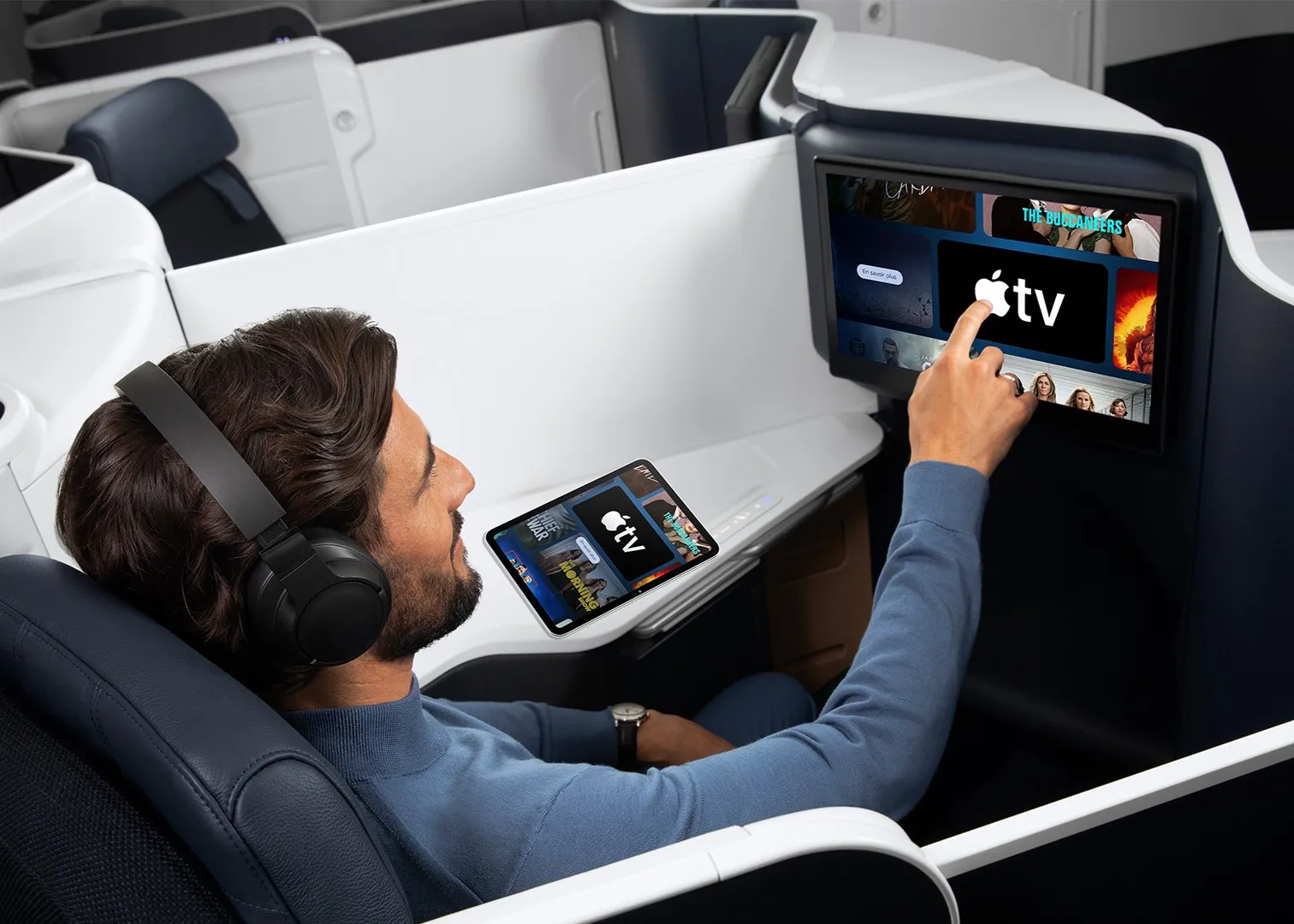
That approach has made Apple TV a popular addition to in-flight entertainment systems, with United Airlines, American Airlines and Air Canada having added it to their offerings. Now, Air France has adopted it, but it’s a case of “viewer beware”.
The airline says it is rolling out more than 45 hours of Apple TV content across its long-haul fleet, featuring high-profile series like Ted Lasso, The Morning Show and Severance, alongside documentaries, children’s programming and a sprinkling of French-produced titles. The content appears both on seatback screens and, via the airline’s Wi-Fi portal, on personal devices.
So far, so similar,
At a glance, this looks like a straightforward upgrade. Apple TV carries a reputation for strong production values and careful curation, and its presence lifts the perceived quality of an in-flight catalogue almost by association alone. For passengers scrolling through options at cruising altitude, the recognition factor helps.
This is the first haul forward.
The second comes through connectivity. Air France is tying the Apple TV partnership to its new Wi-Fi platform, offering a week of free access to the service on passengers’ own devices. The pitch is continuity: start watching on board, continue on the ground. From an airline perspective, this positions connectivity as part of the entertainment experience rather than a separate add-on.

Both moves reflect how in-flight entertainment is evolving. The seatback screen is still central to the experience, but it now complements tablets and phones rather than replacing them. Airlines that treat entertainment as a closed system will eventually feel dated. Extending the experience beyond the cabin suggests a more contemporary understanding of how passengers consume content, and takes adantage of evolving in-cabin technology.
Then comes the backward step.
Air France offers only the first three episodes of each Apple TV series on board.
This detail changes the nature of the partnership. Three episodes function as a sampler, designed to introduce characters and establish a narrative arc while leaving the story unresolved. It is a familiar tactic in the streaming economy, where partial access encourages subscription rather than satisfying demand.
Inside an aircraft cabin, the effect is exacerbated.
In-flight entertainment has traditionally operated on a simple promise: this is what you get for the duration of the flight. The constraints were technical and commercial, but they were broadly understood. When a series appears with a hard stop after three episodes, the limitation becomes a sales pitch.
In short, the seatback screen becomes a showroom.
For Apple, the logic is obvious. The airline environment offers a captive audience and a chance to convert curiosity into paying customers. For Air France, the association with a premium streaming brand enhances its own positioning, while avoiding any obligation to provide full-season access.
For passengers, the experience becomes more ambiguous.
Long-haul flights remain fragmented viewing environments. Meals, instructions and announcements interrupt episodes, and sleep competes with storylines. Three episodes may establish interest, but they rarely provide satisfaction. The result is a sense of unfinished business that follows passengers off the aircraft.

Air France still points to the scale of its overall entertainment offer. More than 1,500 hours of content sit across its long-haul fleet, including hundreds of films, podcasts, destination guides and wellbeing programmes. The airline continues to reserve a substantial portion of its catalogue for French productions, reinforcing its cultural identity alongside global appeal. Hardware upgrades, including higher-resolution screens and Bluetooth audio support, also improve day-to-day usability.
Those strengths remain intact, and the Apple TV partnership does not diminish the broader catalogue.
However, it introduces a shift in tone. Entertainment moves from service to strategy. The cabin experience begins to mirror the economics of streaming platforms rather than standing apart from them.
This shift reflects a wider pattern. Airlines have grown comfortable embedding commercial relationships into digital touchpoints, from loyalty apps to onboard portals. Entertainment now joins that list.
Air France has taken two meaningful steps forward by refreshing its content offer and integrating it with a modern connectivity platform. It has also taken one step back by importing a streaming sales model into a space where passengers expect completion rather than conversion.
On a long-haul flight, entertainment remains a way to pass time, not a teaser for next time.
* Arthur Goldstuck is CEO of World Wide Worx, editor-in-chief of Gadget.co.za, and author of The Hitchhiker’s Guide to AI – The African Edge.