


CES
CES 2026: Qira links
your screens
Lenovo and Motorola have introduced a personal AI designed to follow users across devices, writes ARTHUR GOLDSTUCK.

Lenovo has spent years talking about AI as an invisible layer inside devices. With Qira, it has put a name and a structure to that idea, tying it directly to how people actually use their phones, PCs and tablets during a day.
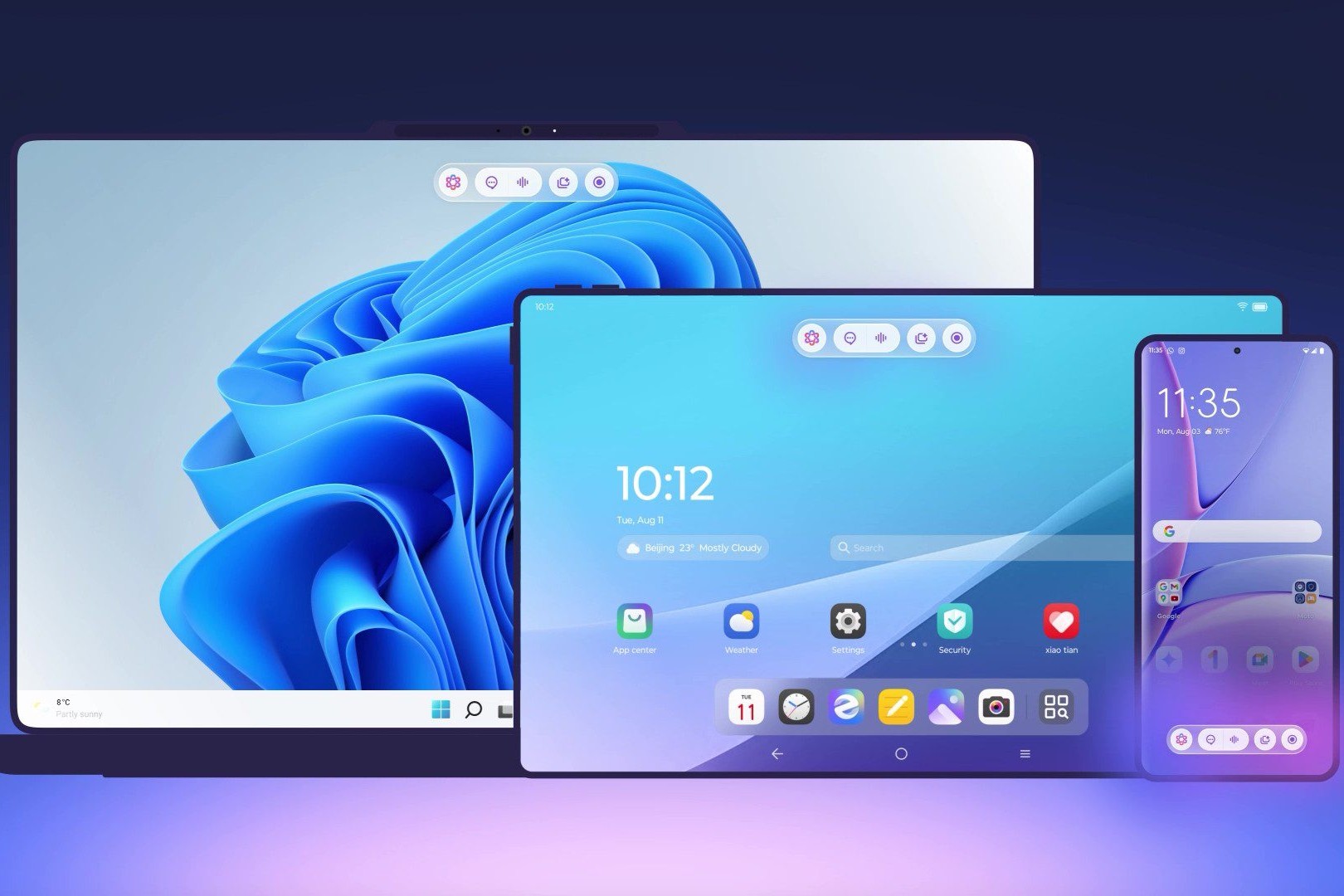
Qira is the shared label for a new personal AI that runs across Lenovo and Motorola devices. On a ThinkPad or Yoga it appears as Lenovo Qira. On a Motorola smartphone it shows up as Motorola Qira.
The proposition is straightforward. Start a task on a laptop, continue it on a phone, and return to it later on a tablet, without resetting the process each time. Qira is designed to recognise activity, retain context that users choose to share, and surface assistance that fits the moment.
Lenovo describes this as a Personal Ambient Intelligence System. In practice, Qira operates at system level rather than sitting inside a single app. It can suggest actions, summarise missed activity, assist with drafting text, or open related content on another device as users move between screens. The focus sits on coordination rather than command.
Several features illustrate how Lenovo expects Qira to be used. Catch Me Up provides summaries of messages, notifications or activity after time away from a device. Next Move suggests follow-on actions based on current work. Write for Me assists with drafting emails or documents. Pay Attention can transcribe or translate conversations in real time, depending on device and settings.
All of this depends on Qira building a personal knowledge base from information users choose to share. Lenovo says that learning draws on multimodal input, including text, voice and visual cues, with processing prioritised on the device where possible.
“For each of us, AI will boost our creativity, sharpen our intuition, and inspire our imagination, because it now draws from our unique language, habits, experiences, and memories,” says Lenovo chairman and CEO Yuanqing Yang.
Behind the interface sits what Lenovo calls intelligent model orchestration. Instead of relying on a single large model, Qira selects from a pool of specialised models depending on task, device and context. Some processing happens on the device, some on private infrastructure, and some in the cloud.
Lenovo CTO Tolga Kurtoglu says: “This is what we call intelligent model orchestration and is the foundation of any AI super agent. It enables an AI agent to access a pool of specialised models, identify the best one for the user’s need of the moment, and optimise performance.”
Motorola’s role gives Qira a strong mobile dimension. Contextual summaries and suggested actions appear directly on smartphones, positioning them as active participants rather than secondary screens. Lenovo’s PCs extend that behaviour into work and creative environments, where moving between applications and devices has become routine.
What stands out is how Qira assumes fragmented attention as the default state. People shift between meetings, messages, documents and media throughout the day, often across several screens. Qira is designed to follow that movement and reduce the friction of restarting tasks.
That design places pressure on execution. Cross-device intelligence depends on consistent performance, aligned ecosystems and clear boundaries around what information carries forward. Lenovo’s emphasis on permission and local processing speaks to those constraints.
“For a business, the transformation is even more profound,” says Yang. “AI goes beyond process management and workflow optimisation. It empowers organisations to use proprietary data generated from their own operations and apply their own decision logic to become a self-learning, self-reinventing entity.”
* Arthur Goldstuck is CEO of World Wide Worx, editor-in-chief of Gadget.co.za, and author of The Hitchhiker’s Guide to AI – The African Edge.