

Artificial Intelligence
Signpost: What Africa is teaching
the world about AI
Examples of technology transfer in reverse ran through the first Google Cloud Summit held on African soil last week, writes ARTHUR GOLDSTUCK.

A health platform built in Johannesburg is preparing to take on the world’s biggest healthcare markets. A South African screening device based on an AI chest X-ray model has read more than 25,000 scans across six countries. AI that deciphers handwritten receipts for payment systems, built for the informal end of African commerce, is finding applications abroad.
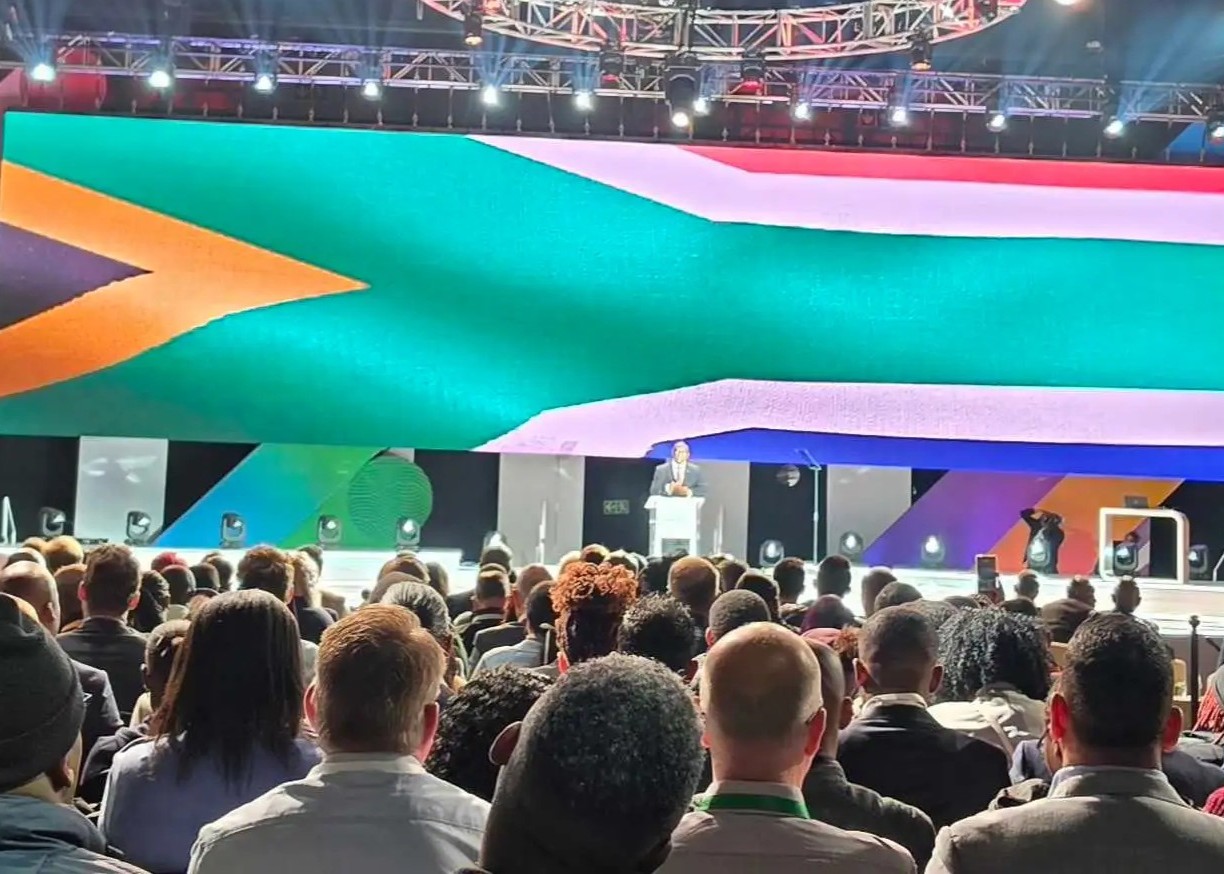
These examples of technology transfer in reverse ran through the first Google Cloud Summit held on African soil, at the Sandton Convention Centre this week.
“The exciting thing is that Africa has the opportunity to define its own path,” Maureen Costello, Google Cloud vice-president for the UK, Ireland and Sub-Saharan Africa, told Gadget at the Summit. “Just as the continent leapfrogged fixed-line telephony through mobile technology, I believe Africa can leapfrog into the agentic era. That’s where African leadership can really make a difference.”
James Manyika, Google senior vice-president of research, labs, technology and society, put the claim at its broadest in his keynote address: “What we’re witnessing is not simply another technology transition. It is the emergence of a new global engine of innovation powered by African talent and ingenuity.”
The word repeated most often at the summit was “agentic”, describing AI agents that carry out complete tasks on a user’s behalf. Retail group Pepkor told the summit its agents watch over 27-million parcel deliveries, recommending rerouting before problems reach customers.
The handwritten-receipt tool was among examples cited by Carlos Magalhães, Google Cloud area industry sales leader for Sub-Saharan Africa.
“Across Africa there are integrations between banks, governments and payment systems that often don’t exist elsewhere because necessity has driven innovation here,” he told Gadget.
“Customers have moved beyond using AI simply for productivity. Instead, they’re asking us to help solve their hardest business problems.”
The hardest problem of all belongs to Discovery, which is combining decades of behavioural health data with Google’s Gemini models to build Vitality AI, a platform designed to replace reactive healthcare with personalised guidance. Group chief executive Adrian Gore laid out the vision in a conversation with Costello on the summit stage.
“We’re trying to help millions of people engage with their health, coach them, manage disease and encourage healthier behaviour – all at scale, and all in a highly personalised way. The real opportunity isn’t simply extending lifespan. It’s extending healthspan. We need people to remain healthy, productive and engaged for longer.”
The platform will not stop at South Africa’s borders, he said.
“As we take these capabilities into Asia, North America and elsewhere, enterprise-grade security remains essential.”
His advice to enterprise leaders was blunt: “Focus on solving human problems.”
Most African unicorns, the billion-dollar startups of investor legend, have come from the fintech sector. Asked by Business Times whether other sectors could produce them, Manyika said: “One of our core beliefs is that Africa already has an extraordinary number of entrepreneurs and innovators. Our role is to make sure they have access to the right tools. Healthcare is one of the sectors that could benefit most from this moment in AI.”
When Costello and Manyika met local founders on the eve of the summit, three requests dominated: computing power, tools for places where connectivity cannot be taken for granted, and African language support built into the models.
Said Manyika: “Language is foundational infrastructure, just like connectivity. You don’t want every startup having to build models that understand all of Africa’s languages. Those capabilities should already exist. Founders should be able to build on top of that foundation rather than recreating it themselves.”
Google pledged $1-billion over five years to African digital transformation in 2021, and says it exceeded the figure ahead of schedule. This week it announced a South Africa Digital Exchange Port in the Eastern Cape, connecting to Australia through its Umoja subsea cable. It also announced Africa’s first Applied AI Lab, intended to fund a generation of AI-native startups; and a year of free access to its most advanced AI tools for more than a million university students in six African countries.
In science, more than 32,000 researchers across Africa are using AlphaFold, Google DeepMind’s Nobel Prize-winning protein structure system, many of them working on uniquely African diseases.
“People often talk about AI in terms of making everyday life easier,” said Costello. “But what excites me most is its ability to help people create things they couldn’t create before.”
* Arthur Goldstuck is CEO of World Wide Worx, editor-in-chief of Gadget.co.za, and author of “The Hitchhiker’s Guide to AI – The African Edge”.