


GadgetWings
Tuesday Travel: Don’t be THAT traveller
In the first of a regular column on the technology of travel, ARTHUR GOLDSTUCK offers advice on being a “pro passenger”.

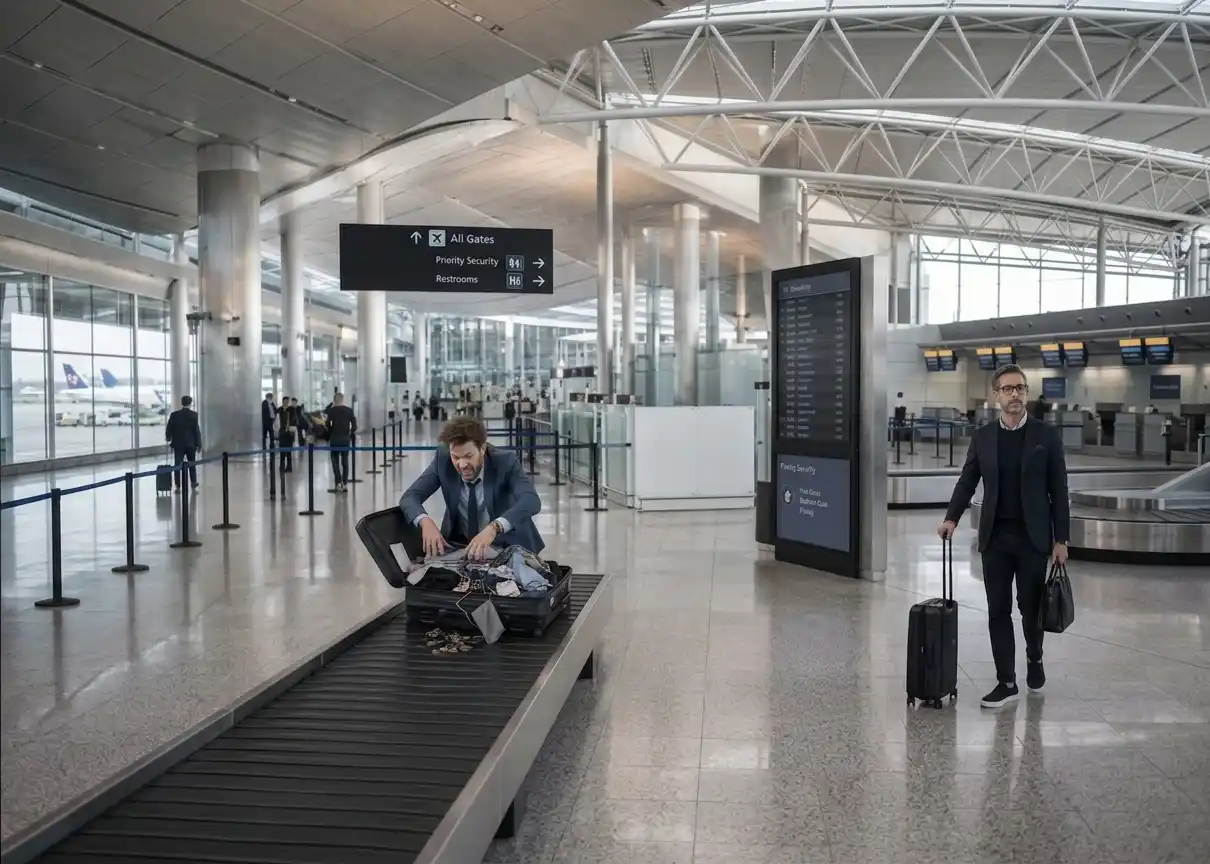
They are easy to spot: the business travellers who seem born into the mould of professional passengers. They have just the right sized carry-on bag, wheeled past the check-in queue at a pace that says they never wonder whether it will fit in the overhead locker. The case is matched by a laptop bag built for the conveyor belt, and sliding easily under the seat on the plane. The shoes are slip-on. The belt is off before the security officer points to it. By the time the amateur behind them has finished emptying pockets into trays, they are already in a lounge or at the gate.
Of course, not everyone can be a pro traveller. But no one has to be THAT guy. The one who stands in the security line for 20 minutes and only when they get to the checkpoint do they begin emptying metal objects from their pockets, discovering the half-litre bottle of water in a backpack, and arguing with security about removing a jacket. Oh, and the laptop is packed somewhere deep in the carry-on suitcase, and has to be retrieved.
The difference between these two travellers has nothing to do with how many miles they’ve flown or how many lounge passes are loaded onto their phone. It comes down to a handful of items: passport or ID, boarding pass, phone, laptop, the contents of a pocket. And whether each one is already exactly where a hand will need it. The pro passenger has effectively run the security line and the boarding gate in their head before walking into either. THAT traveller is improvising in real time, in front of an audience.
The bag itself has to do some of the work. A laptop bag with a dedicated sleeve, easily unzipped and the machine quickly retrieved, buys back most of the time lost to security – rather than one where the machine has to be excavated from beneath a charger and a moleskin diary. The better designs keep that sleeve on the outside face of the bag, separate from the main compartment, so the laptop can come out without anything else coming with it. The same applies to a phone, a watch, a belt, loose change, and the house keys. A small pouch or a single jacket pocket, decided on before leaving the house, means there is one place these things go in and one place they come out of, rather than four pockets and a side compartment getting patted down under the gaze of a security officer.
The jacket is its own test. It has to come off regardless, so the only question is whether it’s already unzipped and half-shrugged-off by the time the officer is likely to ask.
The water bottle causes a similar standoff. A full bottle is usually a non-event because it is instantly dumped in a bin. But discovered half-full, it becomes an argument for THAT guy who thinks a quarter-full 330ml bottle is legally compliant with the 100ml liquid limit. Or the 200ml tub of moisturiser that is only a third full.
What follows at security is, in effect, the bag’s design being tested in public. The pro passenger’s tray fills itself in the time it takes to say “laptop, phone, belt”: each item already loose, already accessible, already separated from the rest of the carry-on, as a result of choices made an hour before.
THAT traveller’s tray fills in stages, as items are located rather than retrieved. A security line moves at the pace of its slowest tray, and every traveller who improvises at the X-Ray machine is setting that pace for everyone else.
A passport or identification demands the same treatment as the laptop: it goes in one place, and that place is not the bottom of a bag. The pro passenger has it out, or is one zip away from out, at each moment of document check. Same applies to the boarding pass. It needs to be alive on the phone, both in a wallet app and the airline app, because either can fail at the key moment. The pro even has a screenshot saved as backup in case the airport’s Wi-Fi has other ideas.
THAT traveller, by contrast, is patting down pockets at security, then scrolling through emails, for a problem that 20 seconds of preparation would have avoided.
The gate is the last test, and the one with the least excuse for failing. When the group number or category is called, there should be nothing to do but walk up and present a boarding pass. THAT traveller, who has had the same forty minutes of sitting at the gate as everyone else, treats the boarding call as a surprise, with phone locked and pass lost again, or patting down the same pockets that failed them at security.
None of this requires expensive gear or frequent-flyer status.
However, one piece of technology worth spending on is the laptop bag itself, designed so that laptop, phone, passport or ID, and boarding pass, can be reached without looking, the moment they need to be in one’s hand. Beyond that, it simply requires deciding in advance where everything goes, so the bag and the traveller’s habits are aligned.
The pro passenger wasn’t born a pro. They learned from their own mistakes, and fixed them. And keep fixing the, as security and boarding protocols change.
THAT traveller never bothers to learn.
* Arthur Goldstuck is CEO of World Wide Worx, editor-in-chief of Gadget.co.za, editor of GadgetWings, and author of “The Hitchhiker’s Guide to AI – The African Edge”.